
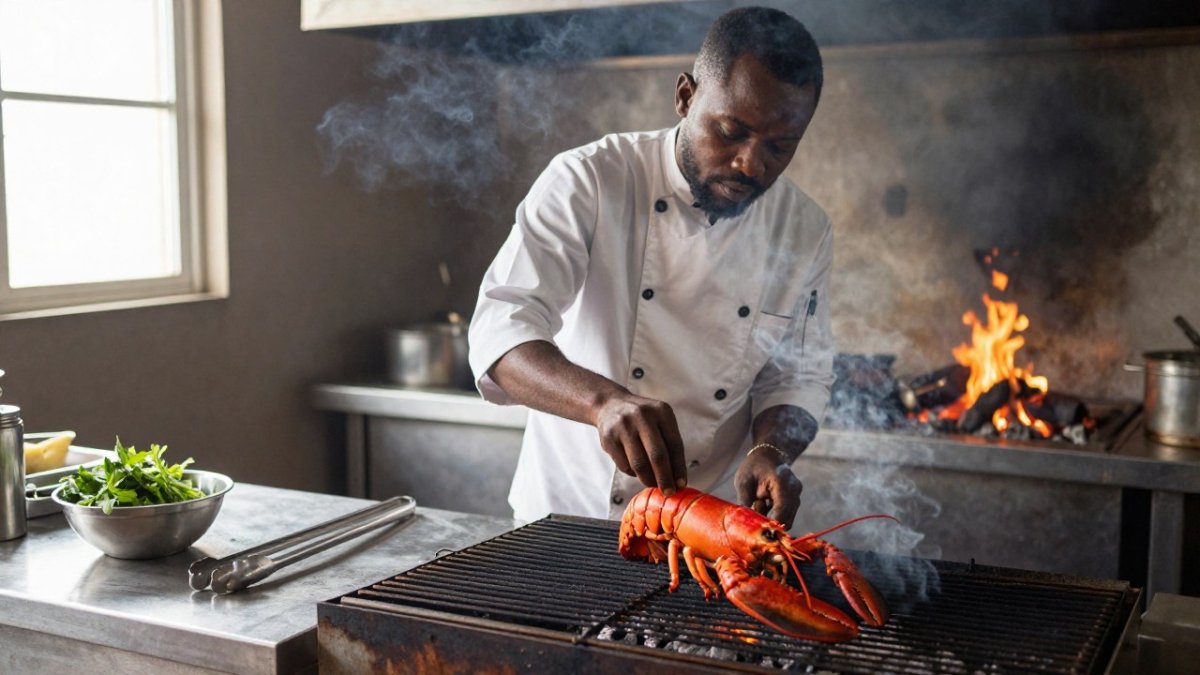
Last Updated: November 28, 2026
Quick Summary
Restaurants prepare lobster by checking quality on arrival, holding it cold, dispatching it humanely, then cooking, cooling and portioning it to order. Live lobsters are typically boiled or steamed in salted water, while tails and split lobster are often grilled. Throughout, how lobster is prepared in restaurants depends on strict temperature control and timing.
- Check each lobster on delivery for activity and smell, rejecting any that are limp or have broken shells.
- Hold live lobsters cold and damp, never in fresh water, and keep the holding period short.
- Cook batches to a core temperature of at least 60°C, then cool rapidly and refrigerate.
- Thaw frozen lobster slowly in the fridge before cooking to protect its texture.
- Use shells and trimmings for stock to reduce waste across sauces, bisques and Thermidor.
Table of Contents
- How Do Restaurants Prepare Lobster?
- From Delivery to the Pass: The Restaurant Kitchen Workflow
- Choosing Live, Frozen or Pre-Cooked Lobster
- How Restaurants Cook Lobster
- Grilled Lobster with Garlic Butter and Lobster Thermidor
- Lobster Thermidor Preparation in a Professional Kitchen
- Food Safety, Portioning and Reducing Waste
- How to Eat Lobster in a Restaurant and Book Your Table
- Frequently Asked Questions
Most diners never see how lobster is prepared in restaurants before it reaches the plate. In a busy London restaurant, how lobster is prepared in restaurants follows a tight routine: careful handling, controlled cooking, and quick service so the meat stays tender. This guide walks through that kitchen process step by step, from the delivery door to the pass.
How restaurants prepare lobster starts with sourcing, then moves through holding, cooking, cooling, and portioning. Each stage has a clear purpose, and skipping one usually shows up on the plate.
Monika Restaurants cooks with open fire and serves seafood alongside grilled meats. The steps below explain what the kitchen team does and why.
How Do Restaurants Prepare Lobster?
Restaurants prepare lobster by checking quality on arrival, holding it cold, cooking it to a set standard, then cooling and portioning it for service. The method depends on the dish, but the safety and timing rules stay the same.
- Check each lobster on delivery for activity and smell
- Hold live lobsters cold and keep them out of fresh water
- Cook to a consistent doneness for every order
- Cool quickly before removing meat from the shell
From Delivery to the Pass: The Restaurant Kitchen Workflow
A professional lobster service runs on a documented workflow from the delivery door to the pass. Most kitchens break it into five stages: receiving, holding, dispatch, cooking and cooling, then finishing and service. Each stage has a check, because a lapse at any point can show up as tough meat or a food-safety problem.
Receiving. On arrival, staff check the consignment note against the order, confirm the lobsters are lively and smell clean, and reject any that are limp or have broken shells. Live lobsters go straight into chilled storage; pre-cooked and frozen product is checked for date codes and surface temperature before it is logged. A common pattern is to record the supplier, batch, date and receiving temperature for every delivery so any issue can be traced.
Holding. Live lobsters are kept cold and damp, never in fresh water, which kills them. Most kitchens use a dedicated fridge or a chilled tank with recirculating seawater, and they keep the holding period short. Pre-cooked meat is stored separately from raw shellfish to avoid cross-contamination.
Humane dispatch. Before cooking, live lobsters must be dispatched humanely. The common professional methods are chilling the lobster in the fridge or an ice slurry for a set period to render it insensible, then a swift cut through the nerve centre, or electrical stunning where the kitchen has the equipment. Staff should be trained and the method recorded; the aim is to avoid unnecessary suffering and to keep the meat quality high.
Cooking and cooling. Batches are cooked to a set time and temperature, then cooled quickly. A common target is to bring the core temperature to at least 60°C for a sustained period, then cool rapidly in an ice bath or blast chiller and refrigerate. Cooking and cooling times are logged for each batch.
Finishing and service. Cooked lobster is portioned, finished to order and sent to the pass. Prep cooks cook only what the next few orders need, which keeps the meat fresh and reduces waste. The team plans each stage around the order rail so nothing waits at room temperature.
Watch out: A lobster left sitting at room temperature between cooking and service loses texture quickly, so the cooling and finishing steps must be timed to the order, not done in advance.
Choosing Live, Frozen or Pre-Cooked Lobster
- Live lobster: Best for whole-lobster dishes. It needs careful holding and handling.
- Frozen lobster: Often used for tails and claw meat. Thaw it slowly in the fridge before cooking.
- Pre-cooked lobster: Saves prep time in busy kitchens. Check the cooking date and keep it chilled.
The article sets out three forms of lobster a kitchen may use, each with its own handling need.
| Form | Best for | Key handling note |
|---|---|---|
| Live lobster | Whole-lobster dishes | Needs careful holding and handling |
| Frozen lobster | Tails and claw meat | Thaw slowly in the fridge before cooking |
| Pre-cooked lobster | Busy kitchens saving prep time | Check cooking date and keep chilled |
How Restaurants Cook Lobster
Most restaurants cook lobster in one of two main ways: boiling or steaming in salted water, or grilling and frying. The choice depends on the final dish and how the kitchen wants the meat to taste.
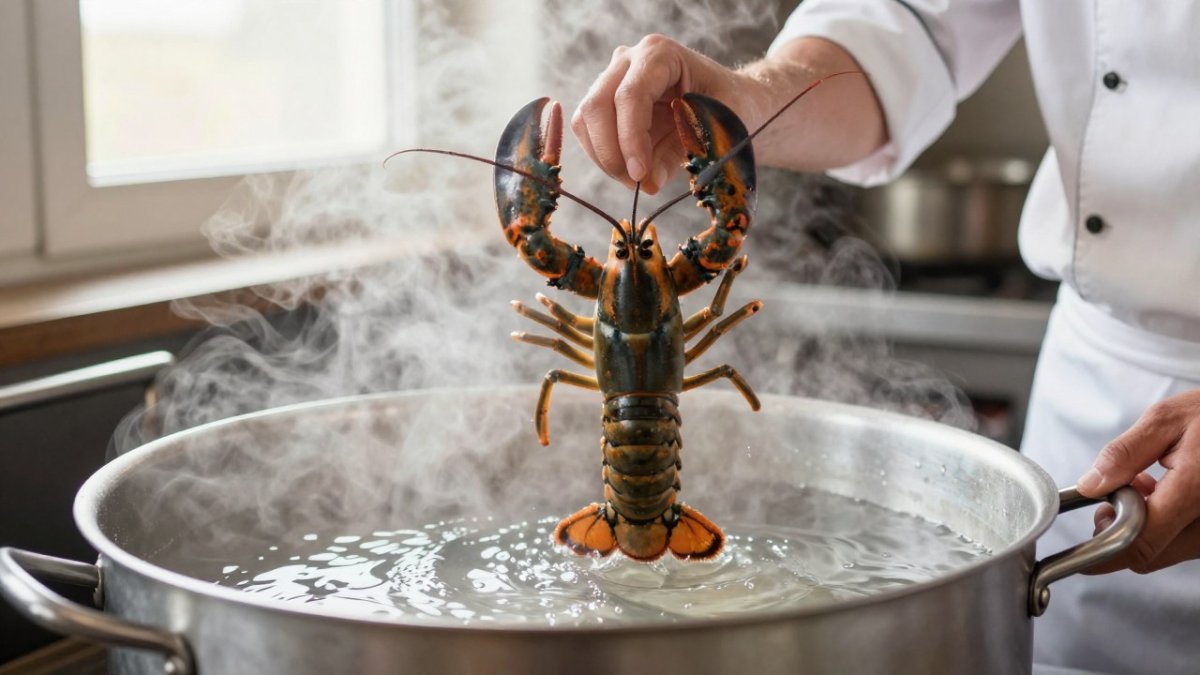
Boiling and Steaming in Salted Water
Boiling is the most common method for whole lobsters. Chefs bring a large pot of salted water to a rolling boil, then add the lobsters one at a time so the water stays at temperature. Steaming works in a similar way and can give a gentler texture.
Watch the timing closely. Overcooked lobster turns tough and rubbery, so cooks check doneness with a timer and a visual cue, such as bright red shells and firm flesh.
Watch out: Overcrowding the pot drops the water temperature and leads to uneven cooking.
Grilling and Frying
Grilling suits split lobster and tail meat. Cooks brush the flesh with butter, place it flesh-side down over the heat, and finish with a quick turn. Frying is less common but works well for lobster bites or tempura-style dishes.
Grilled Lobster with Garlic Butter and Lobster Thermidor
You can see the full range of grilled and sharing dishes on the Monika Restaurants menu. For current prices, check the website or ask for a quote.
Lobster Thermidor Preparation in a Professional Kitchen
Preparing Thermidor takes several steps. Cooks cook the lobster, cool it, remove the meat, and cut it into even pieces. They then fold the meat into a sauce, refill the shells, and cook each portion to order.
Consistency is the goal. Each shell should look the same, and each portion should hold its shape under the grill. Teams often batch the sauce in advance to keep service moving.
Food Safety, Portioning and Reducing Waste
Food safety in a lobster kitchen rests on temperature control, separation and records. Food hygiene rules set the baseline for kitchens in the United Kingdom.
Cooking and cooling are the critical control points. Cook lobster to a core temperature of at least 60°C for a sustained period, then cool it as quickly as possible, ideally in an ice bath or blast chiller, and refrigerate. Log the times and temperatures for each batch so the team can show due diligence. Reheated lobster dishes should be piping hot throughout.
Portioning affects both cost and waste. Cutting tails and claws to a standard weight helps the kitchen price dishes fairly and keep portions consistent. A common approach is to weigh meat after shelling and to use a fixed grammage per dish, adjusting for the cut. Meat yield varies with size and condition, so kitchens often track yield by batch to spot supplier differences.
Waste reduction comes from using the whole animal. Shells, heads and trimmings can be roasted and simmered for stock, which is then used in sauces, bisques or Thermidor. Claw and knuckle meat that is too small for a main plate can go into rolls, pasta or staff meals. Keeping a clear par level for each dish prevents over-ordering and reduces spoilage.
- Keep raw and cooked seafood on separate boards and in separate containers
- Log cooking and cooling times and temperatures for each batch
- Portion to a fixed weight per dish and track yield by batch
- Use shells and trimmings for stock where possible
- Set par levels to avoid over-ordering and spoilage
How to Eat Lobster in a Restaurant and Book Your Table
Eating lobster in a restaurant is simple once you know what to expect.
You can book your table at Monika Restaurants for a date night, dinner with friends or a celebration.
If you are interested in brunch, see the Saturday lobster and steak bottomless brunch for current details.
For more ideas on where to find lobster in the area, read our guide to where you can eat lobster in Deptford.
Frequently Asked Questions
Do restaurants cook lobster alive?
Lobster preparation can vary by dish and by kitchen. Ask the team at Monika Restaurants about the lobster dishes on the current menu, as preparation can vary by dish.
How long does it take to cook lobster in a restaurant?
Cooking time depends on the size of the lobster and the method. Cooking time depends on the dish and the method used. Monika Restaurants can confirm how its lobster is prepared when you book a table.
How is lobster finished with garlic butter?
Garlic butter is one of the flavours you may find on lobster dishes. For the current preparation and any sharing options, check with Monika Restaurants directly before your visit.
What should you expect when ordering lobster in a restaurant?
Ask the team at Monika Restaurants what to expect when ordering lobster. Prices and portion sizes vary, so ask Monika Restaurants for current details.
