
Last Updated: 14 November 2026
Quick Summary
Live music restaurants are often loud enough to make normal conversation hard, especially at peak times. Noise depends on room acoustics, the music's volume and how busy the venue is, so your seat choice matters a great deal.
- Live music nights are usually louder than standard dinners.
- Normal conversation sits at roughly 50 to 60 dB; busy venues sit well above that.
- Seats away from the stage, speakers and kitchen door usually offer easier conversation.
- Ask about performance times and whether a quieter earlier set is available.
- Phone sound apps give only rough readings, so treat them as a guide, not a threshold.
Table of Contents
- How Loud Are Live Music Restaurants in Practice?
- Typical Noise Levels: Decibels Compared
- Why Some Dining Rooms Are Louder Than Others
- Choosing a Quiet Restaurant Seat for Conversation
- How to Measure and Check Noise Before You Book
- Booking a Restaurant for a Large Group with Live Music
- Booking Your Table at Monika Restaurants
- Frequently Asked Questions
How Loud Are Live Music Restaurants in Practice?
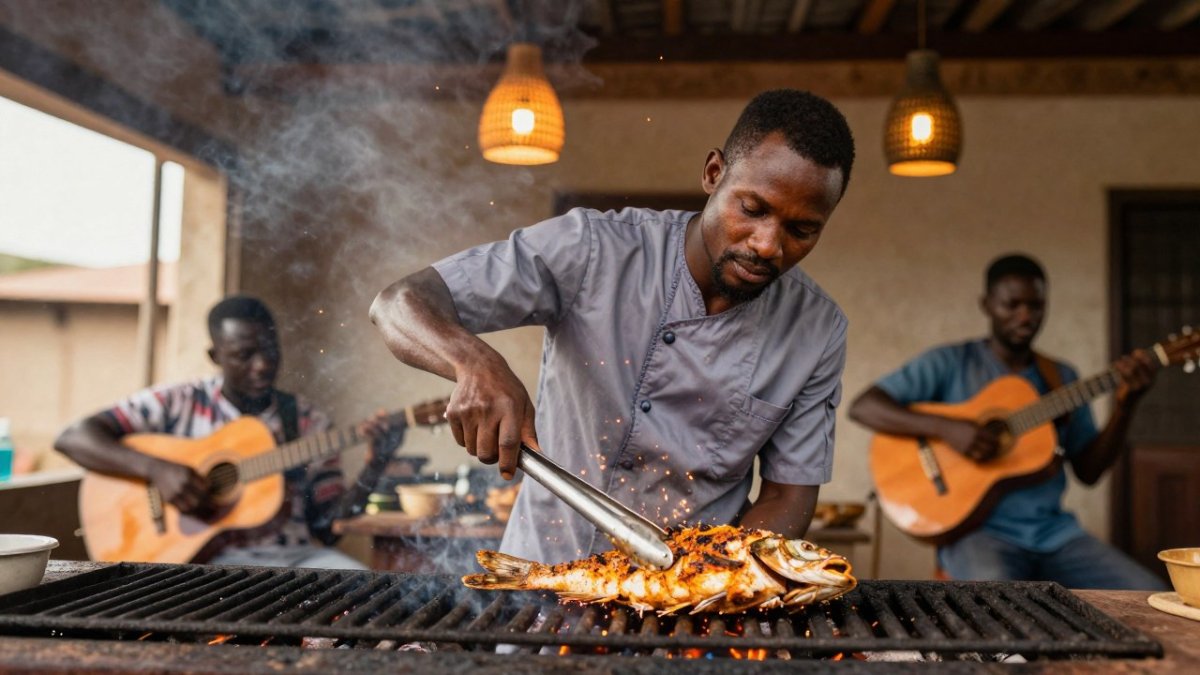
If you are wondering how loud live music restaurants are, the honest answer is that they are often loud enough to make normal conversation hard, especially at peak times. Monika Restaurants, an African-inspired venue in Deptford, offers live entertainment, so this question matters to anyone planning a date night or a group celebration. This guide explains what affects the noise, how it is measured, and what you can do before you book.
Most diners notice the difference between a quiet room and a busy one within minutes. A room with music, a full bar and a packed floor can feel very different from a room with a single acoustic guitarist. Many guests find that the main problem is not the music itself but the combination of music, voices and hard surfaces bouncing sound around the room.
Here is the short version:
- Live music nights are usually louder than standard dinners.
- Noise tends to peak during the performance and the busiest hours.
- Your seat choice makes a bigger difference than most people expect.
Typical Noise Levels: Decibels Compared
Sound is measured in decibels (dB), and the scale is logarithmic, so a small rise in number means a large rise in sound energy (Noise). Normal conversation sits at roughly 50 to 60 dB. A busy restaurant with background music often sits well above that range, and a live band at close range can climb higher still.
For live music restaurants in general, a qualified working range is more useful than a single figure, though levels vary widely between venues and nights.
These are guides, not measurements of any particular venue.
Noise varies by room size, the number of guests, the volume of the sound system and the design of the space. A single reading at one table will not represent the whole room, so treat any number as a starting point rather than a verdict.
The article gives typical sound levels to help you judge how loud a restaurant might be.
| Sound | Approximate level |
|---|---|
| Normal conversation | Roughly 50 to 60 dB |
| Busy restaurant with background music | Well above normal conversation |
| Live band at close range | Can climb higher still |
Why Some Dining Rooms Are Louder Than Others
Two restaurants with the same music can sound completely different. Room acoustics play a large part. Hard floors, bare walls, high ceilings and open kitchens reflect sound, while soft furnishings, curtains and carpet absorb it.
Several general factors push noise up:
- A small room packed with guests
- Hard, reflective surfaces with few soft materials
- Amplified music placed close to tables
- A busy bar or open kitchen close to the dining area
Many venues get louder as the evening goes on, as late bookings and full floors can change the sound level considerably from the start of service.
Choosing a Quiet Restaurant Seat for Conversation
Where you sit often matters more than the overall reputation of a venue. Seats further from the stage and speakers usually offer more comfortable conversation. Corner tables, booths with high backs and spots away from the kitchen door can help, though the best option depends on the layout.
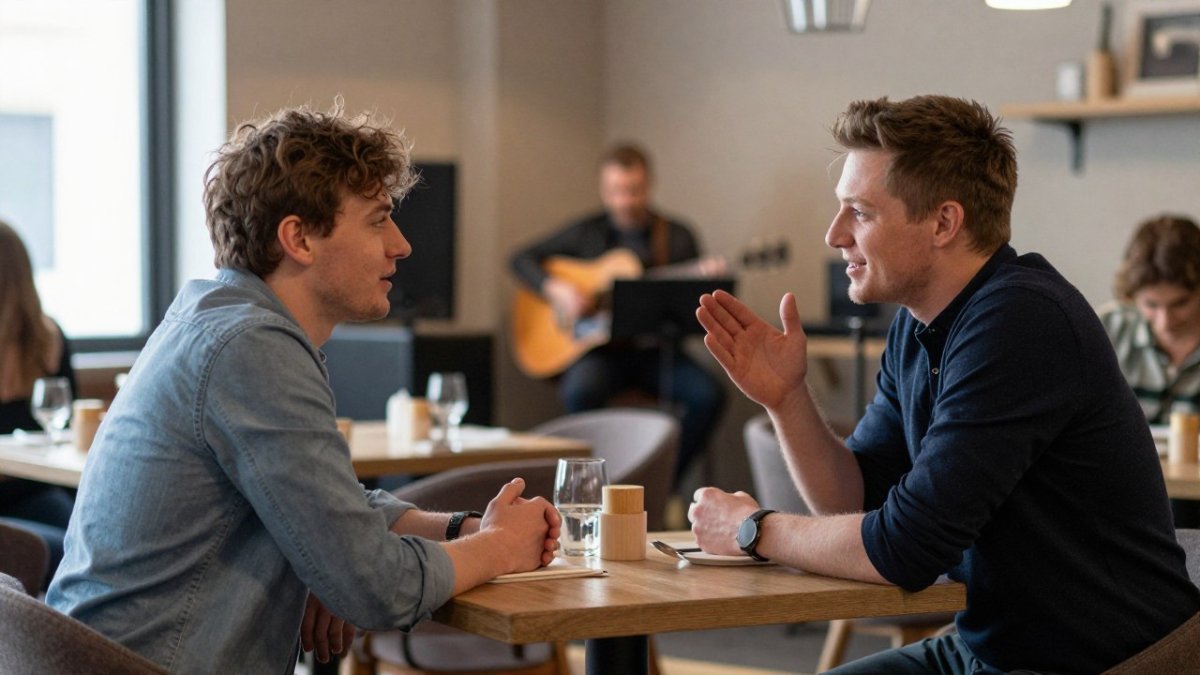
A practical approach:
- Ask for a table away from the stage and main speakers.
- Choose a booth or corner if you want to talk without raising your voice.
- Avoid seats right next to the bar or kitchen doors.
- Book early on performance nights, when the best spots go first.
If conversation is your priority on a date night, a quieter table earlier in the evening is often the better choice.
How to Measure and Check Noise Before You Book
You do not need specialist equipment to get a rough idea of how loud a venue is, but the most useful checks happen before you arrive. A short conversation with the venue and a look at the room will tell you more than a single app reading.
Practical pre-booking checks:
- Ask what time the live performance starts and ends, and whether there is a quieter set earlier in the evening.
- Ask how close the nearest table sits to the stage or main speakers, and whether booths or a back room are available.
- Ask whether the venue has a separate bar or quieter area for conversation during the performance.
- Check whether the music is acoustic, amplified or DJ-led, since the difference in level is substantial.
- Ask about accessibility and communication needs if anyone in your party has hearing loss, tinnitus or is neurodivergent, and whether a quieter table can be reserved.
If you want to measure for yourself, several free smartphone apps offer sound level readings, and a sound level meter gives more reliable results. A simple check works like this:
- Use the same app and phone for every check so readings are comparable.
- Measure at the table you plan to sit at, not at the door.
- Take readings at several points in the evening if you can.
- Compare your readings with a normal conversation to judge how easy talking will be.
Watch out: phone microphones are not calibrated instruments and can under- or over-read by several decibels, so treat app readings as a rough guide only and never as a safety threshold.
Checklist: is the music level comfortable for conversation?
- Can you hear each other at normal speaking volume across the table?
- Do you need to lean in to follow what your companion says?
- Is the music loud enough to make ordering difficult?
- Does the seat sit close to a speaker or the stage?
- Would you still enjoy the meal if the band were playing at full volume?
If you answer no to the first question or yes to the others, ask for a quieter table or a different time. If you are booking for someone with hearing loss or sensory needs, say so when you book rather than on the night, and ask what the venue can do.
Booking a Restaurant for a Large Group with Live Music
Large groups have a different challenge, as conversation tends to split into smaller clusters and the noise level can rise as everyone talks more loudly. Planning ahead helps.
When booking for a larger party at Monika Restaurants, consider:
- Asking for a table in a quieter area if your group wants to talk
- Choosing a time before the performance starts if conversation matters most
- Letting the team know about any accessibility or communication needs
- Booking early, since large parties need more notice
Book your table at Monika Restaurants to discuss seating for your group, or plan a birthday dinner, group booking or private celebration with the team. Our team can talk through seating options and timing with you.
Booking Your Table at Monika Restaurants
Monika Restaurants is at 14 Deptford Broadway, London SE8 4PA. Before you visit, check the opening hours, directions and parking details so you can plan your arrival and seating. If you want the lively experience, the Saturday Lobster & Steak Bottomless Brunch runs from 12pm to 6pm at £60 per person, with live entertainment included.
For more options, read our guide to best venues for large group brunch with live music. Whichever you choose, ask about seating when you book. A quieter table can make the difference between a night you enjoy and one where you spend the evening shouting across the table.
Ready to plan your visit? Book your table at Monika Restaurants and enjoy live music, African-inspired open-fire cooking and a relaxed atmosphere for your next date night, group celebration or weekend brunch.
Frequently Asked Questions
How loud are live music restaurants?
Live music restaurants are usually louder than a standard restaurant, particularly when a band, drummer or DJ is playing at full volume near the dining area. Background levels at a busy table often sit well above the range where comfortable conversation is easy, and the loudest moments tend to come when music and a full room peak together. Levels vary a great deal between venues, between sets and between parts of the same room, so the most reliable guide is to check the layout and ask the venue directly about when music is played and how close the performance area is to the tables.
Can you have a conversation in a restaurant with live music?
Yes, but it depends on where you sit, when you visit and how the music is played. Sitting away from the speakers and performance area, choosing an earlier sitting before the room fills up, and keeping the group to a manageable size all make conversation easier. If you need to hear clearly, mention it when booking so the team can suggest a suitable table, and be prepared to lean in or move closer to the other person during louder sets.
Where should you sit to hear live music without it being too loud?
Tables set back from the stage, away from main speakers and out of the direct line of a drum kit or DJ booth usually offer a more comfortable balance. Ask when booking whether a quieter area is available, and avoid tables directly beside doorways or the kitchen, where noise from people moving around can add to the overall level.
How can I check a restaurant's noise level before booking?
Read recent reviews that mention noise, check the restaurant's own description of its music schedule and call the venue to ask when live music is played and where the tables are placed. If you want a rough measurement, a sound level meter app on a smartphone can give an indication of levels at the time you visit, though app readings are approximate and not calibrated to professional standards. For a large group or a date night, it is sensible to ask for a table away from the music.
