

Quick Summary
Nigerian jollof rice is typically smoky, deep red and firm-grained, made with parboiled long-grain rice and a longer-fried tomato base. Ghanaian jollof rice is usually lighter in colour, looser and more fragrant, with a shorter-fried base and a milder pepper heat. Both share the same core method.
- Nigerian jollof usually uses parboiled long-grain rice, which stays firm under a rich sauce.
- Ghanaian jollof often uses a lighter long-grain rice that finishes fluffy and absorbs flavour gently.
- The Nigerian tomato base is fried longer and reduced until deep red and slightly caramelised.
- Ghanaian jollof has a brighter, fresher tomato flavour and a more orange colour.
- Nigerian jollof carries a sharper, more persistent heat, while Ghanaian jollof is generally milder.
Table of Contents
- Nigerian vs Ghanaian Jollof Rice: What Sets Them Apart
- Rice Varieties and Why They Change the Texture
- Tomato, Pepper and Onion Bases Compared
- Nigerian vs Ghanaian Jollof Rice Ingredients Side by Side
- Nigerian Jollof Rice Recipe: Method and Troubleshooting
- Ghanaian Jollof Rice Recipe: Method and Troubleshooting
- The Jollof Wars: Rivalry, History and What to Serve Alongside
- Frequently Asked Questions
Nigerian vs Ghanaian Jollof Rice: What Sets Them Apart
Last Updated: November 21, 2026
Jollof rice is a one-pot dish of tomato-and-pepper rice that sits at the centre of West African cooking, and few arguments about food run as long as the one over whose version is best. Nigerian and Ghanaian jollof share a name and a core method, yet they taste noticeably different.
Nigerian jollof tends to be smoky, deep red and firm-grained. Ghanaian jollof is usually lighter in colour, looser and more fragrant, with a gentler pepper heat. These are general tendencies rather than rules, because home cooks and restaurants in both countries vary widely. Still, the pattern is consistent enough to guide a fair comparison.
The sections below set out nine differences, from rice variety to the cooking method. Each one explains why the result changes, so you can judge which style suits your table.
Rice Varieties and Why They Change the Texture
The rice you choose shapes the final texture more than any seasoning. Long-grain rice that stays separate after cooking gives a firmer plate, while a starchier grain produces a softer, stickier result. Many Nigerian cooks favour parboiled long-grain rice because it holds its shape under a rich, reduced sauce. Ghanaian cooks more often use a longer, lighter grain that absorbs flavour gently and finishes fluffy. Because the grains stay distinct, the rice carries the aroma of the stock and the spices without becoming heavy.
The practical differences between the two approaches come down to how the grain behaves in liquid. Parboiled rice has been partly steamed before milling, which gelatinises some of the starch and makes the grain firmer and less likely to clump. It typically needs a little more water and a slightly longer simmer than a standard long-grain rice, and it tolerates a longer fry in the sauce without breaking down. A lighter long-grain rice absorbs liquid more quickly, so it can turn soft if the heat is too high or the lid is lifted too often.
If the traditional variety is unavailable, the closest substitutes behave as follows. Parboiled long-grain rice can stand in for the Nigerian style; expect it to need roughly one part rice to two parts liquid by volume, with a low simmer of about 25 to 30 minutes after the base is added. Standard long-grain rice can stand in for the Ghanaian style; it usually needs slightly less liquid and a shorter simmer, often around 20 minutes, and benefits from being rinsed until the water runs clear to remove surface starch. Basmati is a poor match for either style because its dry, separate grains do not absorb the tomato base in the same way, though some cooks use it when nothing else is available and accept a looser result.
Watch out: substituting a quick-cooking grain for parboiled rice without reducing the liquid is the most common cause of soggy jollof, because the grain cannot absorb the volume the recipe assumes. Rinse the rice before cooking to remove surface starch, check the packet for water ratios, and adjust the liquid down by roughly a fifth when swapping parboiled for a lighter long-grain variety.
Tomato, Pepper and Onion Bases Compared
Both styles begin with a blended base of tomatoes, red peppers and onions, but the proportions and the cooking of that base differ.
Nigerian jollof usually relies on a longer fry of the tomato and pepper mix, sometimes with tomato paste added. This reduces the sauce until it turns deep red and slightly caramelised at the edges. Many cooks fry the base until the oil separates, which signals that the sweetness has concentrated.
Ghanaian jollof often uses a lighter base, with a shorter cooking time and less paste. The result is a brighter, fresher tomato flavour and a more orange colour. Onions are typically softened first and sometimes added in larger pieces to the finished rice.
The pepper also varies. Nigerian versions often carry a sharper, more persistent heat, while Ghanaian versions are generally milder. Taste the base before adding the rice and adjust the seasoning, because the rice will absorb whatever you give it. Since the rice absorbs the seasoning, choosing a grain that suits the dish matters too, and The Indian Shelf explores how rice varieties shape the character of biryani.
Nigerian vs Ghanaian Jollof Rice Ingredients Side by Side
A direct ingredient comparison shows where the two styles diverge. The table below summarises common practice rather than a fixed recipe.
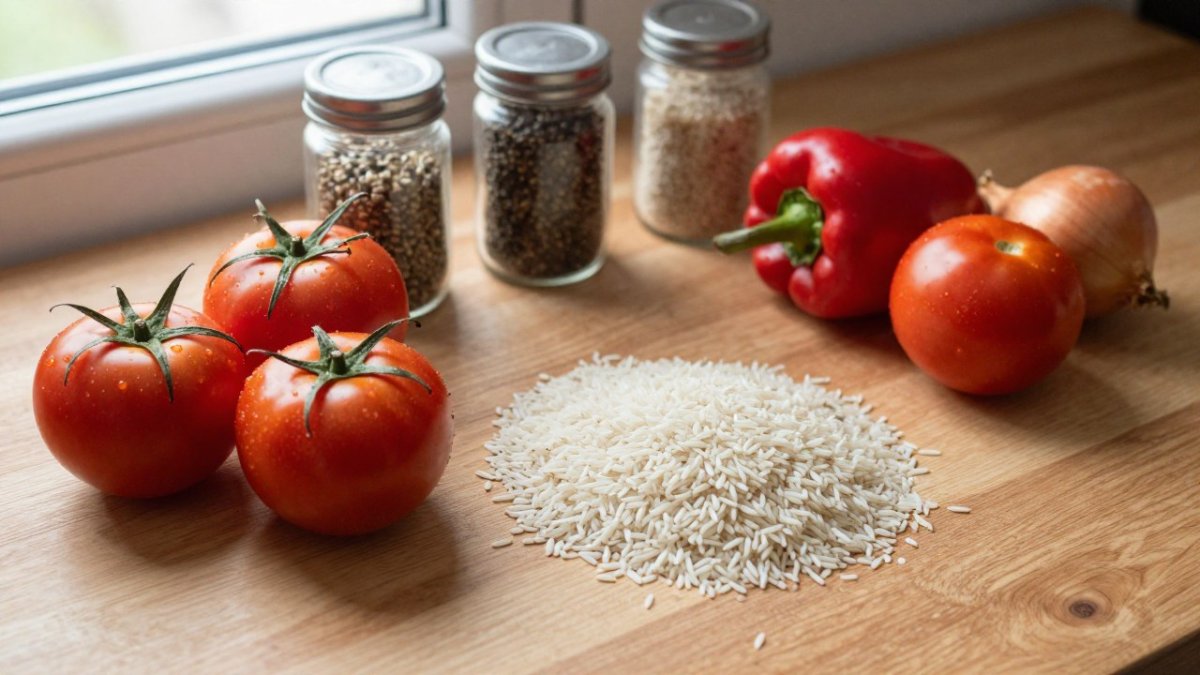
| Ingredient | Nigerian jollof (typical) | Ghanaian jollof (typical) |
|---|---|---|
| Rice | Parboiled long-grain, firm | Long-grain, lighter and fluffier |
| Tomato base | Long-fried, reduced, often with paste | Shorter fry, brighter, lighter |
| Colour | Deep red | Orange to light red |
| Heat | Sharper, more persistent | Milder |
| Aroma | Smoky, rich | Fragrant, fresh |
| Finish | Often with a smoky char | Usually steamed and fluffy |
Use this as a starting point. Adjust the pepper, paste and rice type to suit the heat and texture you prefer.
Nigerian Jollof Rice Recipe: Method and Troubleshooting
To make Nigerian jollof at home, blend fresh tomatoes, red peppers and onions, then fry the mix in oil until it darkens and the oil separates. Add stock, seasoning and a few aromatics, then stir in the rinsed rice. Cover tightly and cook on low heat until the grains are tender and the liquid has been absorbed.
A workable starting ratio for a home kitchen is two cups of parboiled long-grain rice to roughly four cups of liquid, counting the blended base and the stock together. Fry the blended base in about a third of a cup of oil over medium heat for 15 to 20 minutes, stirring often, until it darkens from bright red to a deeper brick colour and the oil begins to pool at the edges. Add a tablespoon of tomato paste partway through if you want a deeper colour. Stir in the rinsed rice so every grain is coated, add the stock and seasoning, bring to a gentle simmer, then cover and cook on the lowest heat for 25 to 30 minutes without stirring.
For the smoky finish, many cooks let the bottom layer catch lightly in the final five minutes. Listen for a faint crackle and smell for a toasted note rather than a burnt one, then remove the pan from the heat and leave it covered for ten minutes so the steam settles the grains. If the rice is hard, add a splash of hot water, cover and steam for a few minutes. If it is wet, uncover and cook gently until the excess evaporates.
Watch out: adding too much water at the start is the most common mistake, and parboiled rice needs more liquid than a quicker grain but will still turn soft if the pan is crowded. Use a wide, heavy-based pot so the rice sits in a shallow layer, and resist stirring once the lid is on, because stirring releases starch and makes the grains clump.
Ghanaian Jollof Rice Recipe: Method and Troubleshooting
Ghanaian jollof starts in much the same way, but with a shorter fry of the base. Soften the onions, add the blended tomato and pepper, and cook until the mixture thickens and smells fragrant. Add stock and seasoning, then the rinsed long-grain rice.
Keep the heat low and cover the pan. Check the rice after the liquid has mostly absorbed and avoid lifting the lid too often, since the steam does the work. If the grains are still firm, add a little hot water and cover again.
If the rice tastes flat, the base was probably under-seasoned. Add salt, a little stock or a touch of heat before serving, and let it rest covered for a few minutes.
The Jollof Wars: Rivalry, History and What to Serve Alongside
The rivalry between the two countries is part friendly teasing and part national pride. Each side claims its version is the original, and social media keeps the argument going. Food historians generally trace the dish to the wider Senegambian region, so both claims rest on how each country adapted it over time. Treat the rivalry as cultural conversation rather than settled fact.
Both styles pair well with grilled and fried proteins. Suya, the spiced grilled beef associated with Nigerian street food, is a natural partner for the smoky Nigerian version. Grilled chicken and fried plantain suit either style. You can view the Monika menu of grilled dishes and jollof to plan your order.
If you want to try the dish in a sociable setting, reserve a table at Monika Restaurant in Deptford.
Frequently Asked Questions
What is the difference between Nigerian and Ghanaian jollof rice?
Nigerian jollof is usually cooked with parboiled long-grain rice and a deep, smoky tomato and pepper base, and it is often finished with a slightly drier, separate grain texture. Ghanaian jollof tends to use a looser, more tomato-forward sauce, and the rice is often softer and more fluid. Both share a tomato, onion and pepper foundation, so the differences come mainly from rice choice, cooking liquid and seasoning balance. Taste preferences vary widely between households, so these are general patterns rather than fixed rules.
Which rice is used for Nigerian jollof and Ghanaian jollof?
Nigerian cooks most often use parboiled long-grain rice, which holds its shape and absorbs the sauce without turning sticky. Ghanaian cooks commonly use long-grain rice as well, though many prefer varieties that cook a little softer. Parboiled rice is widely available in the UK from African and Caribbean grocers and larger supermarkets. Check the packet for cooking times, as they differ between brands.
Is Ghanaian jollof spicier than Nigerian jollof?
Heat depends on the cook, the pepper used and how much is added, so there is no reliable rule that one country's jollof is always hotter. Nigerian versions often use scotch bonnet and a stronger smoky note, while Ghanaian versions can be seasoned to a milder, more tomato-led flavour. If you are cooking at home, add scotch bonnet gradually, tasting as you go, and adjust to your own heat tolerance.
What do Nigerian and Ghanaian jollof rice have in common?
Both are one-pot dishes built on a base of blended tomatoes, onions and peppers, cooked down with stock and seasoning until the rice absorbs the flavour. Both use similar aromatics such as thyme, curry powder and bay leaves, and both are served as a celebratory dish at parties and gatherings. The rivalry between the two is mostly about which version tastes better, not about fundamentally different methods.
