
Quick Summary
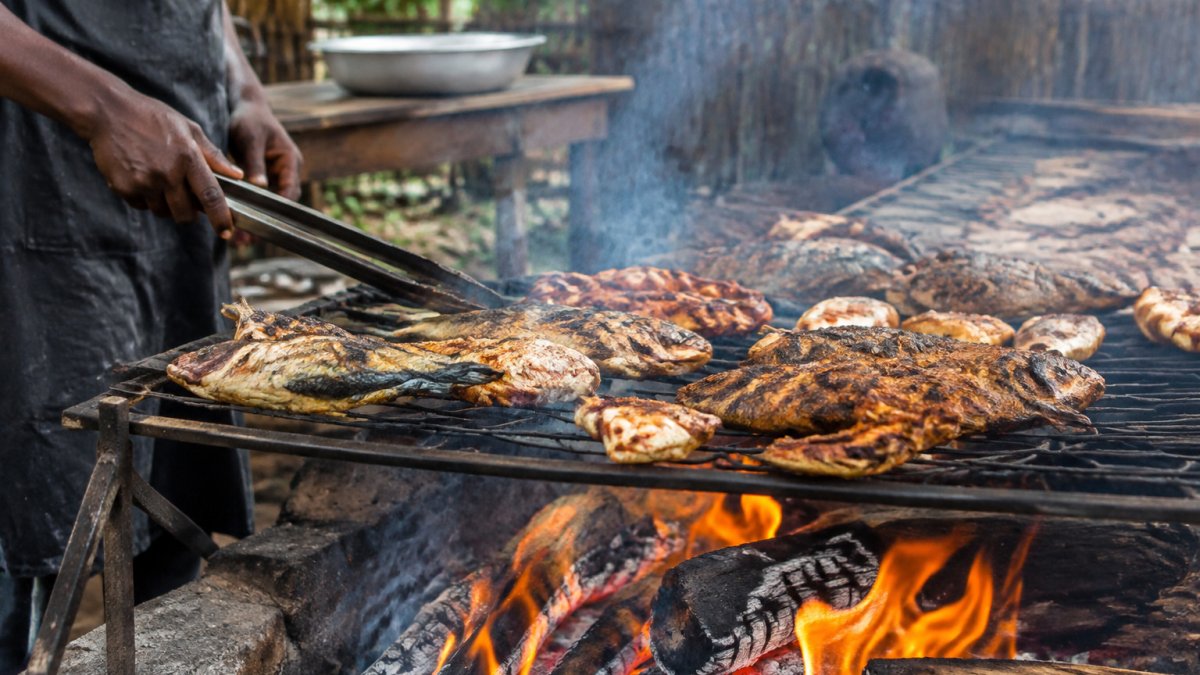
Nigerian open-fire cooking is the practice of preparing food directly over live flame, hot coals or glowing embers, using methods rooted in everyday household cooking rather than leisure. Unlike a Western barbecue, it shapes the whole meal around the fire, with pots, layered ingredients and heat managed by feeding and shaping the fire.
- Open-fire cooking is a household meal tradition, not a weekend barbecue event.
- Firewood gives slow, steady heat for large pots; charcoal gives hotter embers for skewered meat.
- Let the fire burn down to an even glow, avoiding tall flames that scorch the outside.
- Use a hand test: if you can hold your hand above the coals only a few seconds, the fire is hot.
- Never use a barbecue or open fire indoors, in a tent or any enclosed space.
Table of Contents
- Defining Nigerian Open-Fire Cooking and How It Differs From Outdoor Barbecue
- Traditional Nigerian Cooking Practices Rooted in Fire and Fuel
- Regional Variation in Open-Fire Cooking Across Nigeria
- Nigerian Open-Fire Cooking Techniques: Fire Setup, Heat Control and Equipment
- How to Cook Suya Over an Open Fire, Step by Step
- Nigerian Jollof Rice Cooked Over Fire: Method and Flavour
- Open-Fire Cooking Health and Safety: Smoke, Fuel and Safe Handling
- Where to Taste Open-Fire Cooking at Monika Restaurants
- Frequently Asked Questions
Defining Nigerian Open-Fire Cooking and How It Differs From Outdoor Barbecue
Nigerian open-fire cooking is the practice of preparing food directly over live flame, hot coals or glowing embers, using methods rooted in everyday household cooking rather than leisure. Monika Restaurants draws on this tradition in its open-fire cooking, where grilled meat and seafood are prepared over flame.
The key difference from a Western-style barbecue is purpose and method. A barbecue is often a weekend event built around a grill and a few sauces. Open-fire cooking in Nigerian kitchens has traditionally been about making a meal: pots set on stones or simple stoves, ingredients built up in layers, and heat managed by feeding and shaping the fire rather than by a lid and thermometer.
Think of it this way: a barbecue cooks food on a fire, while open-fire cooking shapes the whole meal around the fire.
Traditional Nigerian Cooking Practices Rooted in Fire and Fuel
Across much of Nigeria, cooking has long depended on wood and charcoal. Many households still cook in outdoor or semi-outdoor spaces, where the fire is the only heat source available for stews, grilled meats and rice dishes.
Fuel choice shapes the food. Firewood gives a slow, steady heat suited to large pots, while charcoal produces the hotter, cleaner embers used for skewered meat. Cooks learn to judge a fire by its colour and smoke rather than by numbers on a dial.
These practices are also tied to social life. Cooking over a shared fire is often communal, with family members taking turns to stir, turn and watch the pot. That shared rhythm is part of what makes the food taste the way it does.
Regional Variation in Open-Fire Cooking Across Nigeria
Nigeria is large and varied, and open-fire cooking differs from region to region. Northern kitchens are associated with grilled and skewered meat, while Southwestern and other communities are known for hearty one-pot dishes and rice cooked slowly in big pots.
Ingredients follow the land. Palm oil, yams and locally sourced spices appear in many traditional dishes, and the way they are prepared changes with local custom. Some households pound spices by hand, while others buy them ready-ground.
Because practices vary so much, it is more accurate to speak of Nigerian open-fire traditions in the plural than to describe one fixed method.
Nigerian Open-Fire Cooking Techniques: Fire Setup, Heat Control and Equipment
Good open-fire cooking starts with the fire, and in Nigerian kitchens the fire is usually built in a shallow hearth, a metal tripod stand or a simple clay or concrete stove. The aim is a stable bed of coals rather than a tall flame. Build the fire from dry kindling and small sticks first, add larger fuel once it catches, and let it burn down until the flames die and the coals glow evenly.
Fuel choice changes both heat and flavour. Firewood gives a slower, steadier heat that suits large pots of stew, beans or rice, while charcoal produces hotter, cleaner embers that are easier to control for skewered meat and fish. A common pattern is to use wood for long, slow cooking and charcoal for grilling. Coconut husk, corn cobs and sawdust are also used in some areas as supplementary fuel. Each has trade-offs: wood is often cheaper but smokes more and needs longer to burn down; charcoal lights faster and burns hotter but costs more and must be stored dry.
Heat control comes from moving the food and the fuel, not from a dial. Raise the grill grate when meat cooks too fast, lower it for slower cooking, and add or spread coals to change the heat under a pot. For pot cooking, the fire is often built around the base and then reduced to a steady glow, with the cook moving the pot to a cooler part of the hearth when the liquid is absorbed. A simple test is to hold a hand above the coals at cooking height: if you can hold it there for only a few seconds, the fire is hot; longer means it is moderate. Most practitioners judge by the colour of the coals and the sound of the fire rather than by numbers.
Watch out: building the fire too large or adding fuel after the coals have formed can send flames up under the food and burn the outside before the centre is cooked.
The table below summarises the main fuel choices and what each one means for cooking.
| Fuel | Best for | Key difference |
|---|---|---|
| Firewood | Large pots of stew, beans or rice | Slower, steadier heat; smokes more |
| Charcoal | Skewered meat and fish | Hotter, cleaner embers; costs more |
| Coconut husk | Supplementary fuel in some areas | Used alongside other fuels |
| Corn cobs | Supplementary fuel in some areas | Used alongside other fuels |
| Sawdust | Supplementary fuel in some areas | Used alongside other fuels |
How to Cook Suya Over an Open Fire, Step by Step
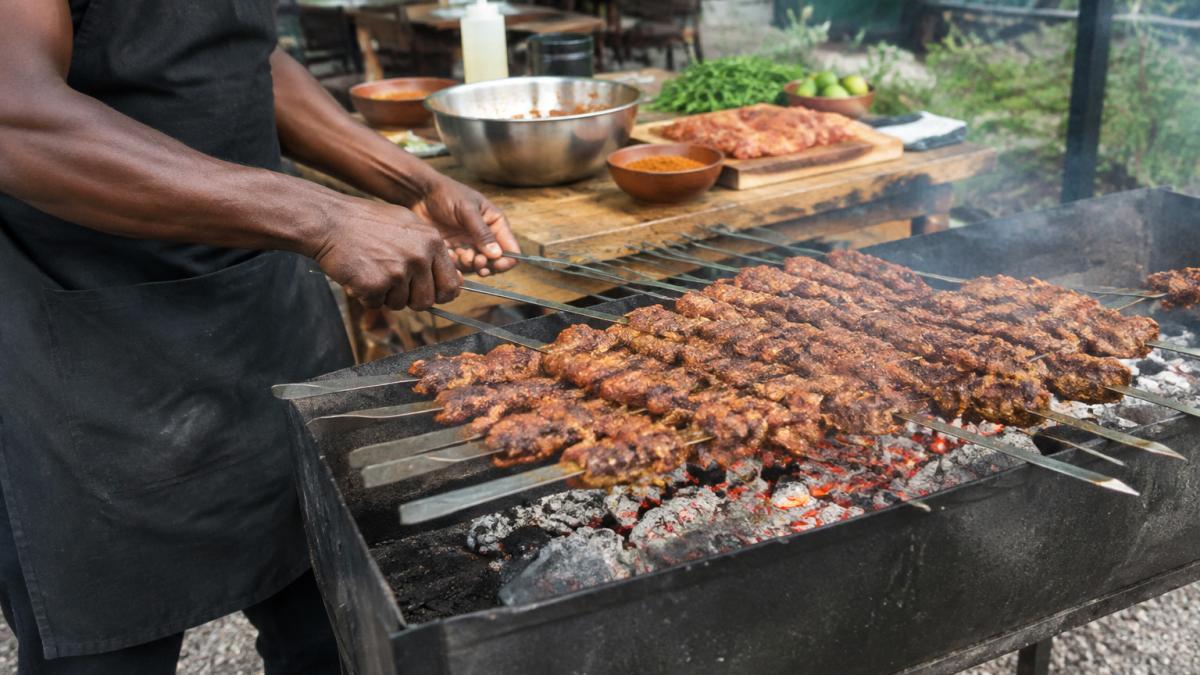
Suya is one of the best-known open-fire dishes, made from thinly sliced beef skewered and grilled over coals. Follow these steps to cook it at home:
- Slice the beef. Cut lean beef into thin strips, about 3 to 4 mm thick, so it cooks quickly and absorbs the spice.
- Make the yaji spice mix. Combine ground peanuts, chilli powder, ginger, garlic powder and salt. Adjust the heat to taste.
- Coat the meat. Rub the spice mix over the beef and leave it to rest for at least 30 minutes.
- Skewer the meat. Thread the strips onto wooden or metal skewers, folding them so they stay in place.
- Prepare the fire. Let the coals burn down until they glow evenly with little flame.
- Grill and turn. Cook the skewers over medium embers for about 3 to 5 minutes per side, turning often until the meat is browned and cooked through.
- Serve. Sprinkle extra yaji on top and serve with sliced onion and tomato.
A common mistake is cooking over flames rather than embers, which burns the outside before the inside is done.
Nigerian Jollof Rice Cooked Over Fire: Method and Flavour
Jollof rice is a celebrated one-pot dish, and cooking it over fire gives it a smoky depth that a standard hob does not. The base is a blended tomato and pepper sauce, fried in oil until it darkens and loses its raw taste.
Add stock, spices and parboiled rice, then cover and cook slowly over a steady fire. Stir gently so the rice does not stick to the bottom, and keep the heat low once the liquid is absorbed. A slightly charred layer at the base, often called the "party" portion, is considered a sign of good jollof.
Serve it with grilled chicken or fish for a complete meal.
Open-Fire Cooking Health and Safety: Smoke, Fuel and Safe Handling
Cooking over open fire has real health and safety considerations, and they are best understood alongside the tradition rather than as an afterthought. Smoke from wood and charcoal contains fine particles and carbon monoxide, and long-term exposure in poorly ventilated spaces is linked to respiratory problems. In many Nigerian households, cooking happens outdoors or in semi-outdoor kitchens precisely because ventilation matters, and the fire is often set at the edge of the compound or in a separate cooking area. Where cooking does happen indoors, a window, door or open eaves can make a meaningful difference. Good ventilation helps limit smoke exposure, while a balanced view of the health benefits of open-fire cooking also weighs the risks that come with the method.
Fuel choice affects exposure. Charcoal burns more cleanly than wet wood, and dry fuel produces less smoke than damp fuel. A common pattern is to let wood dry for weeks before use and to avoid burning treated or painted timber, which releases harmful chemicals. The trade-off is practical: cleaner fuels and improved stoves often cost more upfront, so many households balance affordability against smoke and fuel efficiency. In the UK, open-fire cooking is not a routine household practice, but anyone using a barbecue or outdoor grill should follow the manufacturer's guidance and the advice of the UK Health Security Agency guidance on carbon monoxide and fuel-burning appliances. Never use a barbecue or open fire indoors, in a tent or in any enclosed space, even after the flames have died down (Indoor BBQ Carbon Monoxide warning - Plaistow).
For food safety, keep raw meat separate from cooked food, use separate utensils and boards, and make sure meat is cooked through before serving. Suya and other grilled meats should reach a safe internal temperature and show no pink in the centre. Wash hands before and after handling raw meat, and keep marinades that have touched raw meat away from cooked food unless they are boiled first. Let coals cool completely before disposal, and never leave a fire unattended. Keep children and pets well clear of the cooking area, and position the fire away from fences, trees and anything that can catch light.
Watch out: charcoal that looks grey and cold can stay hot for hours, so douse it with water and stir before disposing of it.
Where to Taste Open-Fire Cooking at Monika Restaurants
If you want to experience open-fire cooking without building a fire yourself, visit Monika Restaurant in Deptford to see African-inspired grilled dishes prepared over open flame. The menu includes grilled fish, lamb chops, chicken, suya and jollof, along with sharing platters and cocktails. You can view the full menu and prices before you go.
For a date night, a dinner with friends or a celebration, book a table at Monika Restaurant. If you have already tried cooking suya at home and want to compare, find authentic open-fire suya in London or read our jollof rice and grilled chicken guide to understand the dish more deeply.
Frequently Asked Questions
What is Nigerian open-fire cooking?
Nigerian open-fire cooking is the practice of preparing food directly over flames, hot coals or glowing embers rather than on a gas or electric hob. It is common in rural kitchens, village cooking and street food, and it is used for grilling meat and fish, cooking large one-pot dishes and preparing staples such as jollof rice. The method gives food a smoky character that is difficult to reproduce indoors, and it remains a central part of everyday Nigerian cuisine across many regions and households.
How is suya cooked over an open fire?
Suya is thin strips of beef threaded onto skewers, coated in a dry spice mix containing ground peanuts, chilli and ginger, then grilled over hot coals. The meat is turned frequently so it cooks evenly and the spice crust forms without burning. Once cooked, it is typically sliced and served with raw onion, tomato and extra spice. Keeping the coals steady and the heat moderate is the key to tender, well-flavoured results.
Is open-fire cooking the same as barbecue?
The two overlap, but they are not identical. Barbecue usually refers to slow smoking or grilling in a purpose-built outdoor unit, often as a leisure activity. Nigerian open-fire cooking is a daily food-preparation method that uses direct flame or embers across a wider range of dishes, including stews, rice and skewered meats, and it is often rooted in household and community cooking. The fuel, equipment and cultural purpose differ accordingly.
What are the health and safety considerations of cooking over an open fire?
Open-fire cooking produces smoke that can carry fine particles and carbon monoxide, particularly in enclosed spaces with poor ventilation. Using clean, dry fuel, keeping the cooking area open to fresh air, and keeping children and pets away from the flames all reduce risk. Cooking surfaces should be stable, flames controlled and water or sand kept nearby. Food should be cooked thoroughly, particularly meat, and kept covered and separate from raw ingredients to prevent contamination.
