
Last Updated: November 12, 2026
Quick Summary
To order at an African grill, mix smoke, spice and something starchy: pick one grilled meat or fish, one starchy side and one vegetable or sauce. For two people, order three dishes; for four, order five or six and share everything. Start with suya, the gateway dish of West African grilling.
- Order one grilled centrepiece per two guests, such as suya, lamb chops or grilled fish.
- Pair skewers with a rice dish, as they disappear fast and may leave you hungry.
- Leave fierier dishes like asun and nkwobi until your second visit.
- Ask for sauce on the side so you control the heat a spoonful at a time.
- Order slightly less than you think you need, as it is easy to add a dish later.
Table of Contents
- How to Build a Balanced Order at an African Grill
- Signature Grilled Meats and Skewers to Start With
- The Best Nigerian Dishes for Beginners
- Traditional West African Side Dishes Worth Ordering
- What Is Suya Spice Made Of?
- A Spice Level Guide and Ingredient Glossary
- Cultural Etiquette and How to Eat with Your Hands
- Booking Your Table and Planning Your Order
- Frequently Asked Questions
How to Build a Balanced Order at an African Grill
Knowing what to order at an African grill starts with one rule: mix smoke, spice and something starchy. An African grill is a style of cooking where meat, fish and vegetables are cooked over open flame or charcoal, then served with rice, plantain and bold sauces. The best tables are built around that balance so nobody leaves hungry or overwhelmed.
The food arrives in waves, not courses. That changes how you order.
Starters, Mains and Sides: A Simple Ordering Framework
Think in threes. Pick one grilled meat or fish, one starchy side and one vegetable or sauce. For two people, order three dishes. For four, order five or six and share everything.
Here is the framework we recommend:
- One grilled centrepiece per two guests: suya, lamb chops or grilled fish
- One rice dish for the table: jollof or Efik rice
- One starchy side: fried plantain, pounded yam or asaro
- One fresh or spicy contrast: a dipping sauce, salad or extra heat on the side
- One snack to start: puff puff or meat pie while you wait
If you want to see the full spread before deciding, you can explore the menu in advance.
Think in threes: one grilled centrepiece, one starchy side and one vegetable or sauce, scaled to the size of your party.
| Party size | Dishes to order | Note |
|---|---|---|
| Two people | Three dishes | Share everything |
| Four people | Five or six dishes | Share everything |
| Per two guests | One grilled centrepiece | Suya, lamb chops or grilled fish |
| The table | One rice dish | Jollof or Efik rice |
| The table | One starchy side | Fried plantain, pounded yam or asaro |
| The table | One fresh or spicy contrast | Dipping sauce, salad or extra heat |
| To start | One snack | Puff puff or meat pie while you wait |
Signature Grilled Meats and Skewers to Start With
Start with suya. It is the gateway dish of West African grilling and the one most first-timers remember. Beef skewers are coated in yaji spice and cooked over open flame until the edges char. The result is smoky, savoury and slightly nutty.
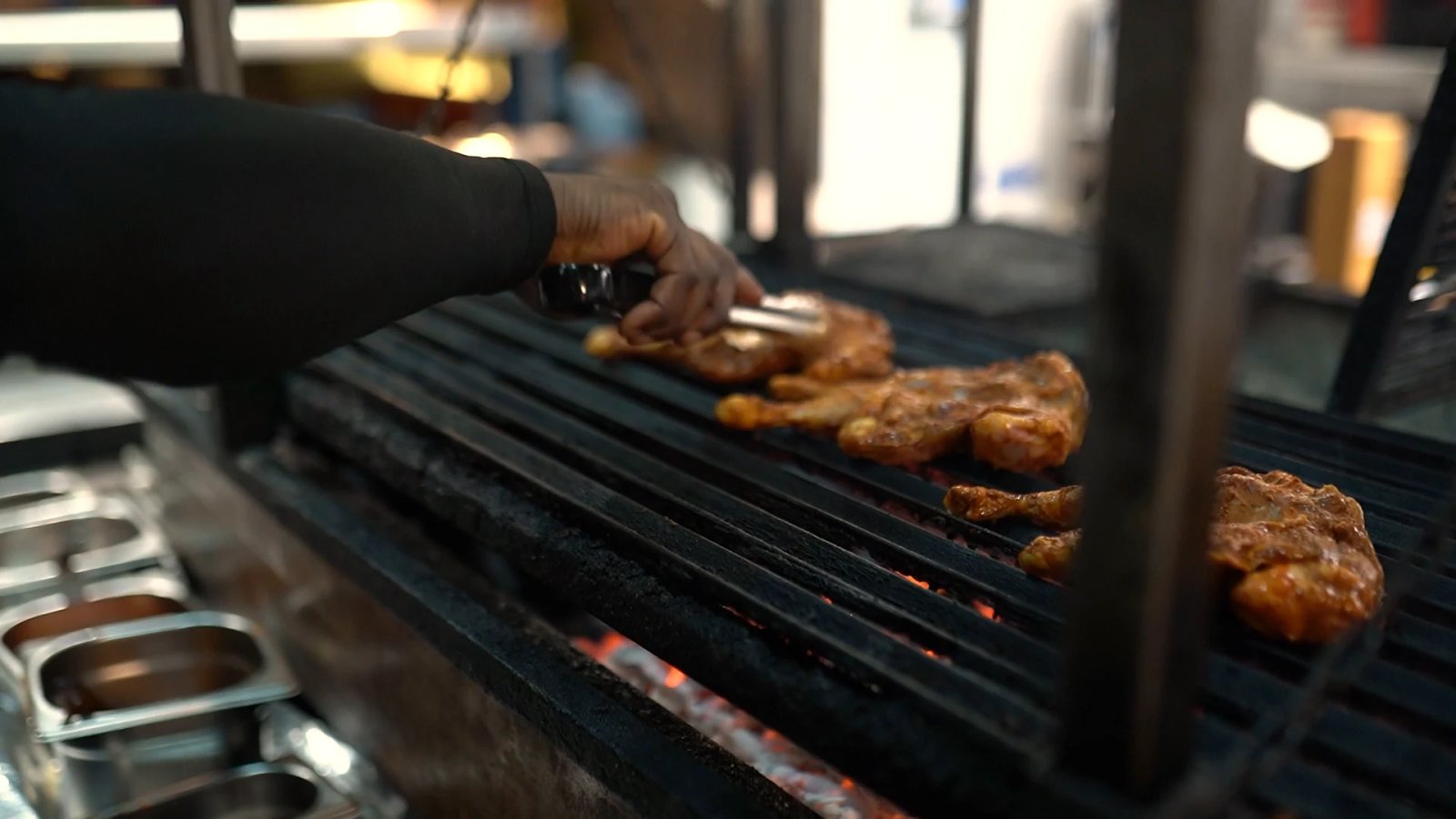
Beyond suya, order one or two of these. Each has a different cut, marinade and heat profile, so they do not eat the same way:
- Asun: goat meat tossed with scotch bonnet and onion, then finished over flame. Order it if you want a fierce, smoky kick.
- Balangu: shredded roast lamb finished over flame. Good for anyone who finds skewers too chewy.
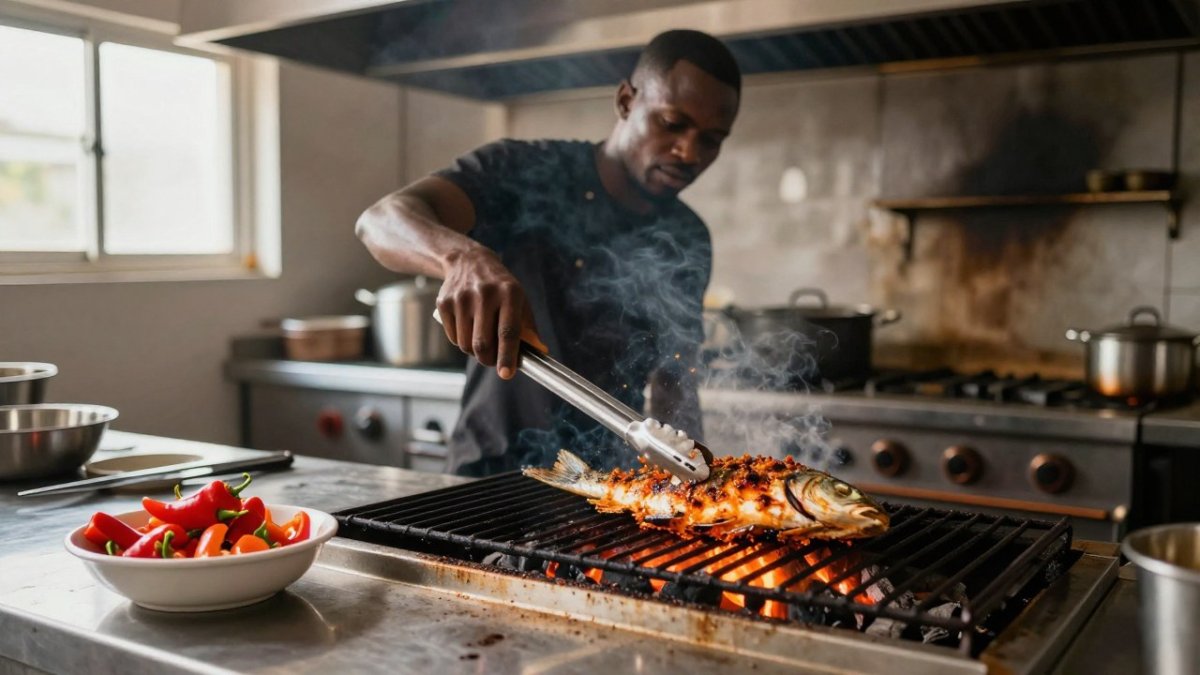
- Grilled sea bream: whole fish, char-grilled. Best eaten with your hands, picking meat away from the central bone.
- Lamb chops: charred at the edges and tender in the middle. Ask the kitchen about the seasoning if you prefer it milder.
- Chicken: a gentle entry point if you are unsure about heat. Ask whether it is marinated in yaji or a milder rub.
A common mistake is ordering only skewers. They disappear fast, so pair them with a rice dish or you may still be hungry.
Suya, Asun and Balangu: What Each One Is
Suya is beef skewers seasoned with yaji, a peanut and chilli spice mix, then grilled over open fire. Asun is goat meat tossed with scotch bonnet and onions. Balangu is shredded roast lamb finished over flame.
All three share one trait: smoke. If you want the full background on the fire techniques behind them, read our guide to Nigerian open-fire cooking.
Watch out: portion sizes can vary, so ask what to expect before you order several skewers.
The Best Nigerian Dishes for Beginners
Jollof rice is a popular first order for anyone new to Nigerian food. It is a rice dish cooked in a tomato and pepper base, and it is typically savoury and gently spicy.
For the best Nigerian dishes for beginners, we point guests towards:
- Jollof rice: smoky tomato rice, the crowd-pleaser
- Fried plantain: sweet, caramelised, never threatening
- Grilled chicken: mild, charred and familiar
- Puff puff: sweet fried dough balls, ideal to finish
Leave the fierier dishes, like asun and nkwobi, until your second visit. There is no prize for ordering the hottest thing on the menu.
Traditional West African Side Dishes Worth Ordering
Sides carry the meal. Order at least two, because grilled meat alone will not fill the table. Traditional West African side dishes do the heavy lifting here, and they are where the value sits. The trick is to match texture to the grill: something starchy to absorb smoke, something soft to scoop sauce, and something fresh to cut the heat.
Our shortlist, with what each one actually does at the table:
- Jollof rice: a tomato and pepper rice, a good benchmark side.
- Efik rice: a lighter, herby alternative to jollof.
- Pounded yam: smooth and dense, made for scooping up sauce.
- Asaro: soft yam cooked in a peppery sauce.
- Plantain: fried, sweet and mild, a counterweight to spicier dishes.
- Mixed salad or coleslaw: a cool contrast to the heat.
Watch out: pounded yam is filling, so start with one portion shared across the table.
If you are ordering for a group, a mix of rice, a starchy side, plantain and a fresh side covers a range of textures.
What Is Suya Spice Made Of?
Suya spice, called yaji, is a ground spice blend that is commonly made with peanuts and chilli.
If suya is the dish you came for, our step-by-step guide on finding beef suya in London covers how to spot authentic open-fire cooking, what to order and how to book.
A Spice Level Guide and Ingredient Glossary
Heat is the thing first-timers worry about most. Here is the honest version: not everything is fiery. Plenty of dishes are mild, and sauces usually arrive on the side so you control the burn.
Mild, Medium or Fiery: Choosing Your Heat
Use this as your ordering guide:
- Milder: grilled chicken, plantain
- Fiery: asun and dishes made with scotch bonnet
Ask for sauce on the side. Then add heat a spoonful at a time. A quick ingredient glossary helps too:
- Yaji: the peanut and chilli suya rub
- Scotch bonnet: a small, very hot chilli used across West African cooking
- Nkwobi: spicy cow foot in a thick palm oil sauce
- Puff puff: sweet fried dough, served as a snack or dessert
- Meat pie: a baked pastry filled with seasoned minced meat
Cultural Etiquette and How to Eat with Your Hands
Eating with your hands is a traditional custom in many West African homes. Wash first, then use your right hand to scoop pounded yam or asaro.
A few points of etiquette worth knowing:
- Share from the centre of the table rather than guarding your own plate
- Use your right hand for eating and passing dishes
- Taste before you add more yaji, the heat builds
- Expect a lively room, not a quiet one
If you are planning a date night and want to know how loud the live entertainment gets, ask when you book.
Booking Your Table and Planning Your Order
Book ahead for groups. Larger parties benefit from planning ahead. Mention the occasion and any dietary needs when you reserve.
Ready to reserve? You can book a table for a date night, a group dinner or a celebration, and ask about large bookings at the same time.
Before you travel, check our address, opening hours and directions so the journey is simple.
One last piece of advice: order slightly less than you think you need, as it is easy to add a dish later.
Building an order at an African grill comes down to balance, not bravery. Start with suya, add jollof and plantain, keep sauce on the side and share everything. At Monika Restaurants, our open-fire cooking, sharing platters and live entertainment are built for exactly that kind of table, whether it is two of you or a group of fifteen. Get started with Monika Restaurants and book a table for a meal you will talk about afterwards.
Frequently Asked Questions
What is the most popular dish at an African grill?
Suya is usually the dish most people order first. It is skewered beef, chicken or goat coated in yaji spice and cooked over open fire, which gives it a smoky, char-grilled flavour. If you are new to an African grill, ordering suya alongside a side of rice and fried plantain gives you a good sense of the style before you commit to a larger main.
Is African grilled food very spicy?
It can be, but heat is usually adjustable. Scotch bonnet and yaji spice bring the fire, yet many kitchens serve the spice rub or dipping sauce on the side so you control the level. Ask for mild if you are unsure. Starchy sides such as rice and plantain are generally gently flavoured and can balance hotter grilled meats.
What should a first-timer order at an African restaurant?
Start with suya skewers to share, then choose one grilled main. Add a traditional West African side dish, plus fried plantain for something sweet. This mix covers smoky, spicy, savoury and sweet notes without overwhelming you, and it is easy to share across a table.
What are the traditional accompaniments for grilled fish in West African cuisine?
Grilled fish is often served with a starch such as rice or plantain. Ask your server which sides the kitchen recommends.
